



Deck & Patio Furniture Buying Guide
Given the time and money spent to create outdoor deck that will quickly become your family's favorite part of the home, it’s worth the extra effort to outfit it with furnishings to make it a space everyone will enjoy for years to come. While the deck is timeless, your outdoor furniture can evolve with the times and trends, giving you more design flexibility and a greater return on your investment.
In this outdoor furniture buying guide, we’ll arm you with patio furniture buying tips and how to take your deck’s aesthetic from “meh” to “magnificent.” Let’s get started!
What To Consider When Buying Deck & Patio Furniture
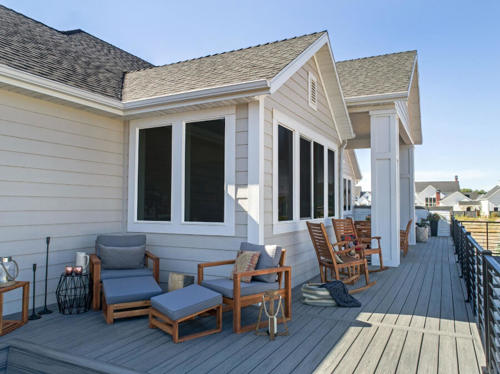
The same way you painstakingly created and followed a design plan to build your deck, it’s just as important to consider how you'll want to furnish and decorate your deck. Planning ahead will allow you to be intentional with your space, envisioning the look and feel you want from your decor, and better able to stick to a budget. Here are a few tips to consider when purchasing patio furniture:
- Evaluate your space: Do you have a large, multi-level deck? Or a smaller, single-slab patio? The size of your outdoor space will play a keen role in the type of furniture you select so it doesn’t feel too cramped or too spare. For instance, if you have a small deck and plan to entertain, consider bench-style seating with built-in storage that can nestle against the perimeter of your deck. This allows for plenty of space to grill and a clever way to store plates, utensils and other needed items at your fingertips. On the flipside, a larger deck makes way for niches that can accommodate different activities. Your challenge will be to find ways to give those sections a cohesive feel.
- Functionality: How do you plan to use your deck? Do you plan to entertain family and friends on the weekends? If so, you’ll need plenty of seating and an outdoor kitchen area. Does your deck surround a pool? If so, think about deck furniture that incorporates storage features for towels and pool toys - as well as lounge chairs and a patio umbrella for shade. Or do you prefer to enjoy quiet time outdoors? Think about comfortable seating with cushions in a fabric that can withstand the elements, or even a cafe-style table-for-two to enjoy your morning coffee with someone special. Understanding how you plan to use your space will help you more clearly envision the furniture you’ll need to create that ambiance.
- Aesthetics and Style: Your deck is an extension of your home. No doubt, you chose railing, lighting, and even the color of your decking to compliment its exterior. Well, your deck furniture should also compliment your deck and home, too. Think about colors that work together, design styles, and accents. Tastes may change, but patio furniture itself can be timeless. Switch it up easily by swapping out throw pillows and outdoor area rugs - so don’t feel you’re locked into a single style forever!
- Budget: Consider how much cash you have to spend to furnish your deck. Assessing your space, how you use your deck and furniture must-haves on your list will help you determine where to spend the bulk of your budget. And, where you can bargain hunt for other, lower priority items.
Materials for Outdoor Patio Furniture
Your deck furniture will be exposed to the elements for prolonged periods of time. Purchasing sturdy, yet comfortable furniture will ensure that you get your money’s worth for years to come. Keep in mind that “sturdy” does not mean sacrificing style. Outdoor furniture comes in a variety of materials that can compliment any aesthetic and budget. However, each type of furniture has pros and cons to consider.
Some of the most common material for outdoor patio furniture include:
Composite:
- Pros: Similar to how composite decking offers the look of natural wood without the burden of upkeep, composite deck furniture is also available in a variety of different finishes while being resistant to mold, mildew, rot, and wear-and-tear from the elements. While sturdy, it’s easy to clean with just simple soap and water and pairs seamlessly with nearly any aesthetic sensibility.
- Cons: Composite patio furniture can be more expensive than some types of wood. However, it requires less of a time investment to maintain.
Plastic and PVC:
- Pros: Among the most inexpensive outdoor furniture options, these lightweight materials give you a range of colors to choose from and are typically low maintenance. In terms of upkeep, you’ll only need to use soap and water - and occasionally spritz your furniture with a mildew-prevention cleaner. Plastic and PVC furniture are lightweight and can be easy to stack, saving you storage space when it’s time to tuck away your deck furniture until next season.
- Cons: While some plastic and PVC furniture can look comparable to high-end teak wood furniture, other pieces can look cheap. Lightweight, plastic and PVC furniture can blow over during heavy winds or storms if not secured.
Steel:
- Pros: Steel furniture is highly durable and, if well-cared for, can last a long time. It’s relatively easy to maintain, only requiring an occasional rinse with soap and water. Unless you opt for rust-resistant stainless or galvanized steel furniture, you may want to periodically apply a protective solution to keep corrosion at bay. Some steel furniture already comes powder coated, offering you added protection and more color options. Because of its sturdy construction, steel is hard to damage and won’t budge when heavy winds kick up.
- Cons: Steel outdoor furniture is among one of the more expensive options. It’s also heavy and difficult to move. Another downside is that steel furniture absorbs temperatures. It can feel hot to the touch in warm weather, or a chilly place to sit during cooler months. If you opt for steel, consider adding high-quality cushions and armrests.
Wrought Iron:
- Pros: Wrought iron is another sturdy option that looks gorgeous and can elevate your deck’s style profile with its gracefully curved designs. If you’ve ever wanted the feel of a Victorian tea garden in your own backyard, wrought iron can help bring your Bridgerton fantasies to life! Wrought iron is sturdy and long-lasting, especially if well-maintained. Plus, its weighty construction makes it durable and hard to move or blow over in harsh weather.
- Cons: Wrought iron is among the more expensive options for outdoor furniture. And, without proper maintenance, it’s susceptible to rust – especially if used outdoors in areas with heavy snow and rainfall. To maintain, apply a weather-resistant coating and regularly clean it with mild soap and water. Use a scrub brush to reach some of the smaller swirls and decorative areas. You’ll also want to apply paint to any scratches or rusty areas to help prevent further corrosion. Like steel and aluminum, wrought iron it will respond to temperatures and get either very hot or very cold to the touch, depending on weather.
Aluminum:
- Pros: If you like the look of steel and wrought iron, but don’t want heavy, difficult-to-move deck furniture, aluminum can give you some of that functionality in a lighter weight. Aluminum is also rust- and fade-resistant and easy to maintain, requiring only periodic cleaning with soap and water. Most aluminum deck furniture is powder coated, which not only enhances its durability and resistance to the elements, but also gives you a wider variety of colors to choose from.
- Cons: Aluminum is lightweight, which is great if you plan to move it from one place to another on your deck. However, if you live in windy areas, it can blow over more easily than sturdier options like steel or even wood. Additionally, like steel and wrought iron patio furniture, its surface can get hot or cold depending on the weather.
Wicker:
- Pros: If you’ve ever watched an episode of the iconic television show The Golden Girls and envied their lanai, wicker furniture is an eye-catching option that can give you the feel of sunny Miami no matter where you are. Fortunately, wicker and rattan furniture made from natural materials are less susceptible to warping and rot. Adding a fresh coat of paint or lacquer every year can help improve your wicker’s resistance to mold and water. Apart from that, it’s relatively low maintenance and only requires infrequent cleaning with mild soap and water. Although it’s lightweight, wicker outdoor furniture is far sturdier than its intricately-woven construction might lead you to believe at first glance.
- Cons: Due to its intricate craftsmanship and natural materials, wicker furniture can be one of the more expensive options for deck furniture. Although it’s relatively low-maintenance, you’ll still need to inspect your wicker furniture for any loose weave or unraveling of the rattan. Not only can this compromise its structural integrity, but it can poke you when you walk past or sit down. On its own, wicker furniture might not be very comfortable, so be sure you’ve reserved enough budget to invest in comfy cushions and throw pillows in a weather-resistant fabric.
Wood:
- Pros: Wood is always a classic choice and capable of working in any aesthetic. Renowned for its solid construction, wood furniture can last for many years, if properly maintained. Certain types of wood, like teak, are naturally water-resistant. Other varieties – like cedar, redwood, and cypress – are naturally rot-resistant. However, if you opt for a less expensive wood, it’s important to practice regular maintenance to preserve your investment.
Cons: Depending on the material, wood deck furniture can be among the most expensive options. Even the most rot- and water-resistant wood furniture still requires regular upkeep. Investigate the type of lacquer, oils, and preservatives you’ll need to keep it looking its best before purchasing a specific type of wood. Additionally, keep in mind that wood can split and splinter - which is no fun when you sit down unaware.
Patio Furniture Sets
Your aesthetic and the size of your deck will help you narrow your choice for the best outdoor dining sets for your patio. For smaller-sized patios, a small bistro table with two chairs offers a cozy, elegant option. Mixed media outdoor bistro sets – like this tile-and-metal table and chairs – gives off a Mediterranean vibe, while a simple wood bistro set adds rustic ambiance to your deck.
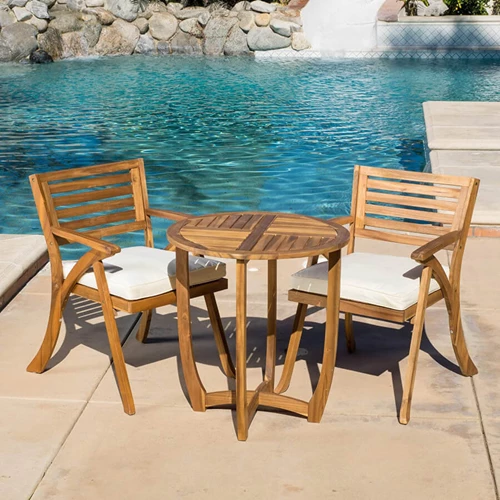
Want something to fill more space - or a larger table to entertain more guests? There are endless choices of outdoor dining sets that can seat four or more.
This extendable outdoor dining set features drop leafs that allow you to comfortably seat between six to eight people. Even if you’re tight on space, a smartly designed set of rattan barstools with matching high-top offers elegance and economy of space. Especially since it’s equipped with built-in storage for your favorite beverages and mixers.
Remember: Even if an outdoor dining set seems a little plain, you can always punch it up with colorful cushions or add a vase or potted plants to liven things. Consider cost, materials, and how you plan to use it when choosing an outdoor dining set.
Outdoor Patio Chairs
Patio chairs and seating are some of the most valuable and versatile furniture additions to your deck. You’ll want chairs that are comfortable, durable, and stylish.
If you plan to use your deck for sunbathing or drying off after a dip in your pool, a chaise lounge is a great choice, allowing you plenty of room to stretch your limbs. However, if you’d prefer to take it easy on your patio and kick back with a good book and a cold beverage, nothing beats a rocking chair. While traditional wood rocking chairs lend your porch or patio rustic charm, there are also colorful options that allow you to add a pop of color and a more modern twist on a timeless classic.
Adirondack chairs are one of the most popular choice for deck furniture, and with good reason. These deck chairs have wide armrests – perfect for balancing a plate of BBQ or a refreshing drink – as well as a gently sloping structure that supports your lower back. Adirondack chairs come in a variety of materials – from wood to plastic to durable composite – and an endless array of colors, offering you both style and comfort in a single seat.
Patio Tables
Even if you don’t have room for a large dining table, your patio can benefit from a few smaller, well-placed outdoor tables. Similar to indoor accent or end tables, outdoor patio tables come in a variety of heights and sizes to suit any space or need.
For a quaint-yet-colorful bistro feel, consider a glass top garden end table that’s as pretty as it is practical. If modern minimalist is more your style, a white Adirondack-style outdoor end table might fit the bill. Similarly, if you want something a little more rustic – but still truly unique, opt for a tree stump-shaped end table in ultra durable concrete for a back-to-nature vibe.
Deck Pergolas
An outdoor deck pergola can be the perfect addition that affords you both style and protection from the elements. While there are a plethora of ready-made pergolas available for purchase, learning how to build a deck pergola can be an option for DIY-ers who want to add a more personalized touch to their outdoor space.
If you prefer a ready-made version, there are quite a few inexpensive pergolas available that are attractive and functional. This version, with its stainless steel frame, is priced at below $300 and has a retractable canopy shade. There are, however, larger and more extravagant options in different materials to add character. For instance, this pitched-roof cedar pergola with an insulated steel roof that stands up mightily to the elements!
These options all require assembly and installation - if attempting to do it yourself, you should expect to spend at least a couple of hours and have a friend or family member on hand to help!
Outdoor Furniture Accessories
While your outdoor furniture is the backbone of deck decor, accessories enhance any aesthetic and give a patio creative touches. You can also easily change up your accessories – such as colorful patio umbrellas, cushions, throw pillows, and outdoor area rugs – every few years for a trendier look, or if you just want to breathe new life into your space. Look for waterproof fabrics and materials that are made with outdoor use in mind.
Outdoor textiles aren’t your only option to add a pop of color or create a pleasing palette. Planters and potted greenery make your deck even more welcoming and in harmony with the great outdoors. Simple flower boxes can be beautiful additions to a multi-level deck, while a trellis-style planter can give ground-level decks and patios an opportunity to add climbing vines and veggies into the mix.
Get Started with Choosing Patio Furniture Today
The right patio furniture can help you get even more enjoyment from your deck and complement your design. When choosing your deck furniture, keep in mind the size of your deck, your budget, and materials that will work well for your needs. Start saving those ideas to your Pinterest board or Amazon cart now!
Outdoor Furniture FAQs
What is the best material for outdoor deck furniture? Composite is one of the best materials you can use for outdoor deck furniture thanks to its durability and weather resistance. It won’t rot or warp. For a sleeker, more modern look, aluminum is a rust-free and low-maintenance option.
What is the best weatherproof furniture for outside? The best weatherproof outdoor furniture is typically made from materials like high-quality composite, aluminum, and teak which require minimal maintenance to retain their good looks and structural integrity. Sturdy composite, made from a blend of recycled plastics and wood fibers, is highly resistant to moisture, rot, insects, and UV damage. Lightweight but strong aluminum naturally forms a protective layer that prevents rust and corrosion. It can also withstand rain, humidity and extreme temperatures. Teak’s natural oils and dense grain repel water, resist rotting, and deter insects. Oils allow teak to endure harsh weather better than most natural wood.
What is the hardest-wearing outdoor furniture? The hardest-wearing outdoor furniture is made from HDPE (high-density plastic), powder-coated aluminum, or marine-grade stainless steel. UV-resistant HDPE won’t rot, splinter or absorb water and is the best value for weather resistance. Powder-coated aluminum is rust-proof and low maintenance and is slightly more expensive than HDPE. Often expensive, stainless steel provides premium corrosion resistance which makes it a top choice in water and harsh weather environments.
What types of furniture go best on a deck? Consider balancing comfort, durability, and style when selecting deck furniture. Avoid oversized furniture on small decks, and consider multi-function pieces such as benches with storage to maximize space. Seating, dining sets, umbrellas and canopies are the most basic choices to start when outfitting a deck, with side tables, benches and accessories that provide ambiance, such as fire pit tables and lights, rounding out selections.
What is composite furniture? Composite outdoor furniture is made from a blend of recycled plastics and wood fibers designed to mimic the look of wood without its drawbacks. It is a durable, long-lasting, and low maintenance choice for outdoor spaces. Composite furniture is highly resistant to moisture, UV fading and insects. It won’t rot, warp, or splinter.
Is composite furniture worth it? Yes, composite outdoor furniture is generally worth the cost if you value durability, low maintenance, and long-term performance. It lasts longer than many woods, requires no upkeep, handles extreme weather conditions, and holds up well with minimal care. While it can cost more upfront than simple wood or basic metal furniture, the time and money saved on maintenance and replacement makes it a better long-term value. Budget-friendly pieces such as chairs and small accent items start around $70. Mid-range dining sets run about $300-$1,000, and larger dining sets or sectional seating cost about $1,000-$3,000.
What furniture can you put on composite decking? You can safely place most types of outdoor furniture - metal, composite and wood - on composite decking, but you should consider weight, material, and protection to avoid deck fails, scratching and staining. Use furniture pads to prevent surface scratches and be careful as you move furniture around the deck.
What is the weight limit for outdoor furniture? A deck’s substructure is the foundation that carries the load for everything on a deck - furniture, people, planters, hot tubs - and determines how much weight a deck can safely hold. When selecting outdoor furniture, make sure your deck substructure can accommodate the additional weight. Most standard outdoor chairs weigh 250–300 pounds. Heavy-duty furniture options can weigh 500 pounds or more.
How long does composite furniture last? Composite furniture is a long-term investment, outlasting wood or basic plastic alternatives. While durable, though, its lifespan depends on material quality, usage, and care. The average quality composite, made from a blend of plastics and wood fiber, will last 10-15 years with regular use, while high-quality or premium composite lasts 15-25 years or more, especially if protected from extreme environments. Full sun, heavy rains, and salty coastal air can gradually fade colors, although the pieces will not rot or warp like wood. Regular cleaning with soap and water prevents dirt, mold, and mildew build-up. Heavy loads and rough handling can shorten the lifespan. Cushions and fabrics should be outdoor-rated and may need to be replaced sooner than the furniture frame.
What is the best outdoor furniture for winter? The best outdoor furniture for winter environments is made from materials that resist moisture, freezing temperatures, snow, and salt and are easy to take care of. Aluminum, teak, HDPE/composite and marine-grade stainless steel all perform well in winter climates. Aluminum won’t rust or crack in the cold. Teak, with its natural oils, resists moisture and rotting. HDPE plastics and composites don’t absorb water and are hard to move in strong winter winds. Marine-grade stainless steel resists the corrosion that comes from coastal and salty winter air.
Can you put heavy furniture on composite decking? Yes, composite decking can handle heavy furniture. However, protective pads prevent denting and surface marks. Make sure your deck's foundation is built to withstand the weight.
Can you make furniture out of composite decking? Yes, you can make furniture out of composite decking. It’s actually a popular DIY hobby. Composite decking boards have construction qualities similar to wood and require no special tools. Boards are durable, weather resistant, and require no sealing, staining or painting. The long planks can easily be fashioned into benches, frames for sofas, tabletops, and planter boxes.
What outdoor furniture can be left out all year? HDPE/composite, aluminum, teak, powder-coated steel, marine-grade stainless steel, and all-weather wicker withstand year-round exposure to rain, snow, sun, and extreme temperature swings better than other materials. You may want to use protective feet or pads on the legs of furniture to prevent the scratching of deck boards or a concrete patio. Store cushions indoors or in weatherproof boxes to prolong life. Clean occasionally to prevent dirt, mold, and mildew buildup.
How long after staining a deck can you put furniture on? Wait at least three days after staining a deck before putting furniture back, but always check your stain’s instructions for best results. Wait 48-72 hours for light foot traffic. Some oil-based stains may take up to seven days to fully harden.
Is POLYWOOD outdoor furniture worth it? Yes, POLYWOOD furniture is worth it for its durability and sustainability. Made from recycled plastic, it’s weatherproof, fade-resistant, and lasts decades with little maintenance.
Is Trex outdoor furniture worth it? Yes, Trex outdoor furniture is considered worth it if you prioritize reliable performance with comfort. Weatherproof and long-lasting, Trex outdoor furniture requires little maintenance and comes with a strong warranty. Made from HDPE recycled plastic, it doesn’t rot, crack, chip, peel, or absorb moisture like real wood. It withstands extreme weather. Made in the USA, Trex outdoor furniture comes with 20-year residential warranties on many collections.
What is the best material for outdoor pool furniture? The best materials for pool furniture are aluminum, teak, high‑density recycled plastics, and quality synthetic wicker or mesh fabrics - all of which resist water, sun, chlorine, and humidity damage. Pick rust-resistant frames (aluminum or marine-grade) so the metal won’t corrode near chlorine and salt. Choose quick-drying fabrics to avoid mildew and musty smells. Avoid untreated wood or textiles that absorb moisture and deteriorate fast in pool environments.
What is the most durable metal for outdoor furniture? The most durable metals for outdoor furniture are those that stay strong structurally while resisting rust and corrosion. Marine-grade stainless steel is the top choice for extreme corrosion resistance, especially in coastal and humid climates. Powder-coated aluminum is the budget-friendly choice, remaining rust-proof and easy to care for. Coated aluminum steel is strong and easy on the budget, as well. Make sure you choose a protective finish and maintain a regular cleaning schedule to maximize lifespan.
How long will aluminum patio furniture last? Aluminum patio furniture is one of the most durable, lightweight, and low‑maintenance options for outdoor use. Its lifespan depends on quality, coating, and climate. With a rustproof frame and powder-coated finish, aluminum furniture can easily last 10-15 years with normal care, while high-grade options last 15-25 years.
Can wooden garden furniture be left outside? Yes, wooden garden furniture can be left outside, but how well it lasts depends on the type of wood, finish, and weather conditions. Teak works best in outdoor environments, lasting 20 or more years, with care. Dense hardwoods, such as eucalyptus and acacia, are fairly durable and can last 20 or more years, but need periodic oiling or sealing. Pine, fir and cedar can last 10-20 years with proper maintenance, but may warp, crack, and rot if left untreated or exposed. Using covers and storing cushions helps prolong life. Composite furniture is a better alternative for year-round use. Unlike wood, it won’t rot, crack, or require regular sealing to handle the elements.
Additional Outdoor Furniture and Accessories Inspiration
Not sure where to begin? Check out some of our best-of picks for more inspiration:
As an Amazon Associate, Decks.com earns from qualifying purchases from the links in this post.