Deck railing options in 2026 range from classic pressure-treated lumber to sleek, low-maintenance composite and metal systems. The most popular designs this year favor slim profiles that preserve views, mixed-material combinations like wood posts with metal balusters, and finishes that hold their look with minimal upkeep. Whether you're building new or replacing an aging rail, the material you choose will determine the cost, maintenance, and overall look of your deck for years to come.
Why Railings Matter for Your Deck
Deck railings are an essential part of your deck’s safety and style. Most building codes require railings for decks 30 inches or higher, so choosing the right system is as much about compliance as it is about curb appeal.
Railings also define the look of your deck, helping it blend with (or stand out from) your home’s architecture. They can frame your view, add privacy, and even boost resale value. Railings are one of the first things people notice, so the right choice can elevate your deck from ordinary to unforgettable.
Quick tip: Local codes can vary. Always confirm railing requirements, such as height and spacing, with your local building authority.
Exploring Different Deck Railing Options
You don't have to commit to a single material. Some of the most striking deck designs come from combining materials, like pairing wood posts with powder-coated aluminum balusters or setting glass panels into a composite frame. Mixing materials lets you balance cost and upkeep by putting the more expensive option only where it matters most, such as along the side of the deck with the best view. It's also an easy way to tie your railing into your home's existing exterior finishes.
Deck Railing Ideas by Material
Each railing material offers a different mix of style, cost, and maintenance level. Use the quick links below to jump to the section you care most about:
Material | Cost | Maintenance | Design Flexibility |
Wood | $ | High | Moderate |
PVC/Vinyl | $$ | Low | Moderate |
Composite | $$$ | Low | High |
Steel | $$ | Moderate | Moderate |
Aluminum | $$$$ | Low | High |
Glass | $$$$$ | Low | High |

Wood Railing Ideas
Wood railings are a budget-friendly classic that offer rustic warmth. They are easy to customize with stains and paint but require regular upkeep.
Design Options:
- Vertical Balusters: Traditional look that pairs well with most homes.
- Metal Balusters: Mix wood posts with powder-coated balusters for easier upkeep.
- Cable or Mesh Infill: Creates a modern mixed-material look.

Metal Balusters
Wood balusters are notoriously difficult to paint or stain. But you can use low-maintenance metal balusters with wood posts and rails instead for little additional cost.

More Infill Options
Cable and mesh infill panels pair well with wood frames for a mixed-material appearance that’s both sturdy and stylish.
Softwood Railing Pros & Cons
Pros:
- Most affordable upfront cost
- Easy to source and install
- Flexible design options
Cons:
- Requires frequent maintenance (staining/sealing)
- Susceptible to rot, splitting, and pests
- Shorter lifespan without upkeep

Steel Railing Ideas
Steel railings deliver strength and a classic wrought-iron aesthetic. They’re affordable and sturdy but need occasional painting to prevent rust.
Design Options:
- Vertical Balusters: Simple and strong.
- Geometric Panels: Add architectural interest.
Pros:
- Very strong and durable
- Good value for cost
- Slim profiles preserve sightlines
Cons:
- Can rust if not maintained
- Fewer style options than aluminum

PVC/Vinyl Railing Ideas
PVC railings are lightweight and low-maintenance but can look bulkier than composite railings and be prone to brittleness over time.
Design Options:
- Turned spindles for a traditional look
- Geometric lattice infills
- Mix with aluminum balusters for more style options
Pros:
- Low maintenance
- Affordable mid-tier option
Cons:
- Can look plastic-like
- More brittle in extreme cold
- Limited color options

Composite Railing Ideas
Composite railings combine the look of wood with the durability of recycled materials, offering high design flexibility and minimal upkeep.
Design Options:
- Crown Top Profile: Rounded top rail for a traditional look.
- T-Rail Profile: Flat top rail for a neutral look.
- Classic Profile: A timeless choice that matches most deck styles.
- Composite Balusters: Simple look with low maintenance.
- Aluminum Balusters: Slim, durable, and great for visibility.
- Mesh Infill: Adds texture and a modern edge.

Top Rail Profile Options
Composite railings feature top rail profiles like the T-Rail, with its flat top, or the Crown Top, which offers a more traditional, rounded look.

Composite Balusters
Composite balusters create a clean, classic, wood-like look that complements a variety of architectural styles.

Aluminum Balusters
Pairing composite railings with aluminum balusters is a popular choice for a sleek, mixed-material aesthetic. Aluminum balusters are durable, and their slim profile provides excellent visibility.
Composite Railing Pros & Cons
Pros:
- Highly durable and low maintenance
- Many color and profile options
- Can be curved for custom designs
Cons:
- Higher upfront cost
- Bulkier look than aluminum
Learn more about Composite vs. Aluminum Deck Railing

Aluminum Railing Ideas
Aluminum railings are sleek, modern, and virtually maintenance-free. They resist rust and corrosion and often come with 25–50 year warranties.
Design Options:
- Vertical Balusters: Clean, traditional look.
- Mesh Infill: Industrial chic style with high visibility.
- Rod Rail: Horizontal rods create a minimalist aesthetic.
- Cable Rail: Best for maximizing views.

Vertical Balusters
Vertical balusters are a timeless choice, providing a traditional look paired with the strength and durability of aluminum.

Mesh Infill
The popularity of wire mesh infill panels (sometimes called “hog wire”) is on the rise. It delivers a quasi-industrial/agricultural aesthetic and high visibility.

Rod Rail
Horizontal rod railings are unique in that they can be paired beautifully with a wide range of architectural styles.

Cable Railing
Cable railings are a favorite for minimalist designs, offering an unobstructed view and a clean aesthetic.
Aluminum Railing Pros & Cons
Pros:
- Rust-proof and durable
- Lightweight and easy to install
- Excellent visibility with slim profiles
Cons:
- More expensive than wood or PVC
Check out Trex Aluminum Railings

Glass Railing Ideas
Glass railings create a modern, high-end look and preserve scenic views. They use tempered or laminated safety glass that’s five times thicker than window glass.
Design Options:
- Frameless Glass: Seamless panels for uninterrupted views.
- Aluminum Frame + Glass Infill: Adds durability and structure.
- Composite Frame + Glass Infill: Combines warmth of composite with open views.
- Glass Panels: Check local building codes for approval.

Aluminum Rails with Glass Infill (framed)
This option combines the durability of aluminum with the sleek transparency of glass, creating a framed yet open look.

Frameless Glass
Frameless glass panels provide an uninterrupted view, perfect for showcasing scenic landscapes.
Glass Railing Pros & Cons
Pros:
- Maximum visibility
- Upscale, contemporary look
Cons:
- Highest upfront cost
- Requires regular cleaning to stay clear
See Glass Deck Railing Ideas & DIY

Modern Low-Maintenance Deck Rail Options
If you'd rather spend your weekends using your deck than maintaining it, composite, aluminum, and vinyl railings are worth a closer look.
Powder-coated aluminum and composite rails won't rust, warp, or need annual painting, and most only require an occasional wash with soap and water to keep them looking new. Vinyl falls into the same category with even lower upfront costs, though it offers fewer color and profile options than composite.
All three maintain their finish far longer than wood, which typically needs re-staining or resealing every one to three years to stay protected.
Custom Deck Railing Ideas
Go beyond standard options with custom features that make your deck more functional and stylish.
Curved Railing
Curved railing follows the contour of round or arched decks for a dramatic, high-end look.
Pros: Unique and elegant Cons: More complex installation and higher cost
Deck Rail Lighting
Add ambiance and safety with lighting options:
- Post cap lights
- Stair riser lights
- Solar or wired options
- Integrated outlets for convenience
Cocktail Railing
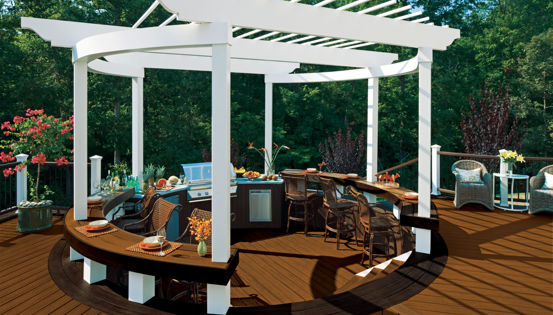
A flat top rail that doubles as a place to set drinks and plates is perfect for entertaining.
Gates
Add gates to enclose pets, secure pool decks, or create separate zones.

Which Type of Railing Costs Most?
When you’re comparing the costs of railings, the material is key in determining both upfront expenses and long-term value.
Wood Railings are typically the least expensive option, with low material costs and straightforward installation. However, their affordability comes at the expense of higher long-term maintenance costs due to staining, sealing, and the time required to repair and prevent rot and weathering.
PVC railings are slightly more expensive initially, but offer a low-maintenance alternative to wood. They resist moisture and rot, making them a more durable option, though their plastic appearance may not suit every aesthetic.
Composite railings fall in the mid-price range. Made from a mix of reclaimed wood fibers and recycled plastic, they combine the natural look of wood with the low-maintenance benefits of PVC. While their upfront cost can be higher than wood’s, composite railings are highly durable and require little upkeep, making them a popular choice for homeowners seeking long-term value.
Metal railings, including cable systems, vary widely in cost, depending on the type of metal. Aluminum railings are relatively affordable, lightweight, and rust-resistant. Stainless steel and cable systems tend to be more expensive but feature a sleek, modern appeal and long-lasting durability.
Finally, glass railings are the most expensive option, offering an unobstructed view that enhances modern or scenic settings. While the initial cost of glass panels and specialized installation is more, their low-maintenance nature and aesthetic appeal make them a premium choice for homeowners willing to invest in a high-end solution.
Ultimately, the choice of railing material depends on your budget, desired aesthetic, and willingness to invest in long-term maintenance.
DIY Deck Railing Ideas
Building your own railing is one of the more approachable deck projects, and it can significantly lower your costs. Pre-assembled panels and simple wood framing packs are the easiest place to start since they come with the posts, rails, and balusters already sized and spaced, which cuts down on layout time and reduces the chance of a measuring mistake.
A ready-to-assemble kit is also one of the simplest ways to make sure your railing meets standard safety codes, since the spacing and height are built into the design. If you're going the fully custom route with individual lumber, double-check your local requirements for baluster spacing and rail height before you start cutting any boards.
Matching Your Deck Railing with the Style of Your Home
Your home’s architecture should guide your railing choice:
- Craftsman Home: Square posts, dark composite rails, simple lines.
- Ranch Home: Low-profile horizontal rails or cable railing.
- Modern Home: Frameless glass or rod rail for a sleek aesthetic.
- Colonial Home: Turned balusters, classic white composite.
- Beachfront Home: Glass for maximum views.
- Cape Cod Home: White railing with X-pattern details.
- Victorian Home: Decorative spindles, ornate post caps.
Ready to Choose Your Railing?
Once you have a material in mind, the next step is seeing how it looks with your deck. Our free Deck Designer tool lets you test different railing styles, colors, and infill options before you commit to anything. Check out these related resources to help you plan the details:
- Wood & Composite Deck Railings
- Cocktail Railing Ideas
- Composite vs Aluminum Railings
- Building a Curved Deck
- Glass Railing Systems
FAQ: Choosing and Installing Deck Railings
What is the least expensive deck railing option?
Pressure-treated wood is the most affordable railing material upfront, both for the lumber and the installation, and it's easy to work with if you're building the railing yourself. However, wood needs staining or sealing every one to three years, so the long-term cost adds up. Vinyl is the next most budget-friendly option with far less upkeep.
What is the standard height for a deck railing?
Common deck railing heights are 36 inches to 42 inches, depending on your local code. Baluster spacing is typically capped at 4 inches so a small child can't fit through the gap. Railings are generally required on any deck that sits 30 inches or more above the ground. Always confirm the exact requirements with your local building authority before you order materials, since codes vary by location.
Can I install cable railing myself?
Cable railing delivers a clean, modern style and open sightlines, and many homeowners install it without professional help, especially with a kit that includes pre-cut cables and tensioning hardware. The main challenge is getting the tension right, since cables need to meet code deflection limits without bowing the posts. Confirm your local post and cable spacing requirements before you order.
Can you mix wood posts with metal railings?
Yes, and it's one of the more popular mixed-material combinations. Wood posts paired with powder-coated metal balusters give you the warmth of wood with balusters that won't need repainting, and the metal infill keeps sightlines open. Just make sure the metal components you choose are designed to attach to wood posts, since bracket and connector systems vary by manufacturer.