



A fair comparison of composite vs aluminum railing involves weighing several factors and preferences. Both materials have their own sets of strengths and weaknesses. For instance, aluminum railing is a bit more durable, and composites are a bit more economical in terms of costs and provide a more traditional (less contemporary) style.
Those are just the tip of the iceberg when it comes to examining the pros and cons of these two railing materials. Learn more about the differences between composite vs aluminum railing, and how to pick the right railing for your project.
When to Choose Aluminum vs Composite Deck Railing
In addition to cost, maintenance and warranty considerations (more on these below), the type of railing you choose will depend mostly on the style that best complements your deck and the architectural character of your house.
Composite Railing
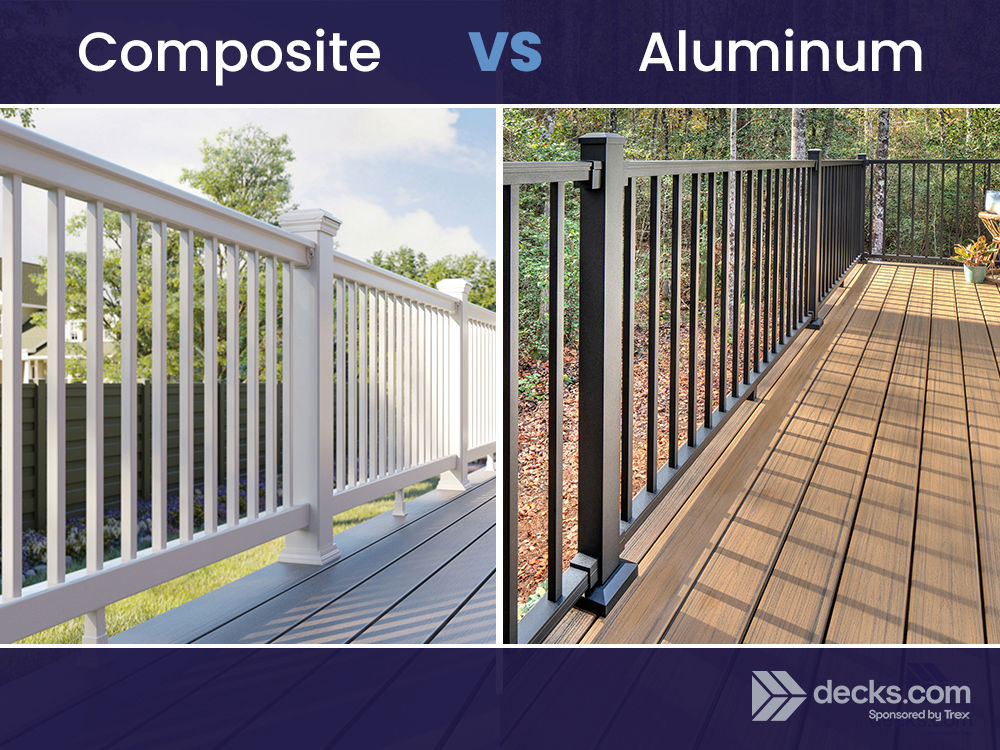
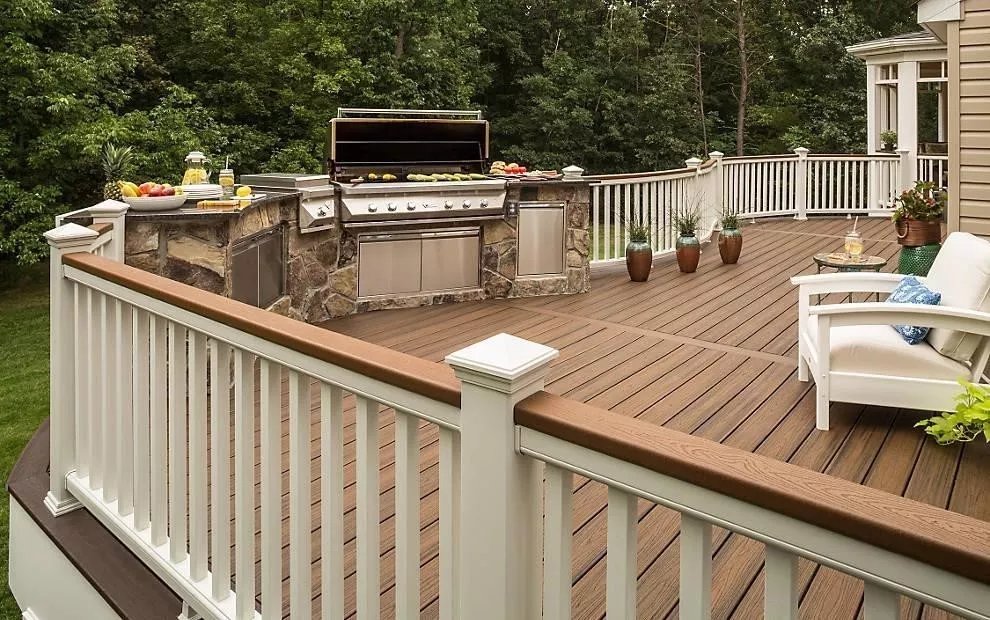
Composite railing delivers a more traditional, substantial profile that resembles painted wood. The broader posts and horizontal rails create a classic, established look that suits craftsman, colonial and farmhouse-style homes. It adds visual weight and definition to the deck, complementing outdoor spaces where a stronger architectural presence is part of the design.
Aluminum Railing
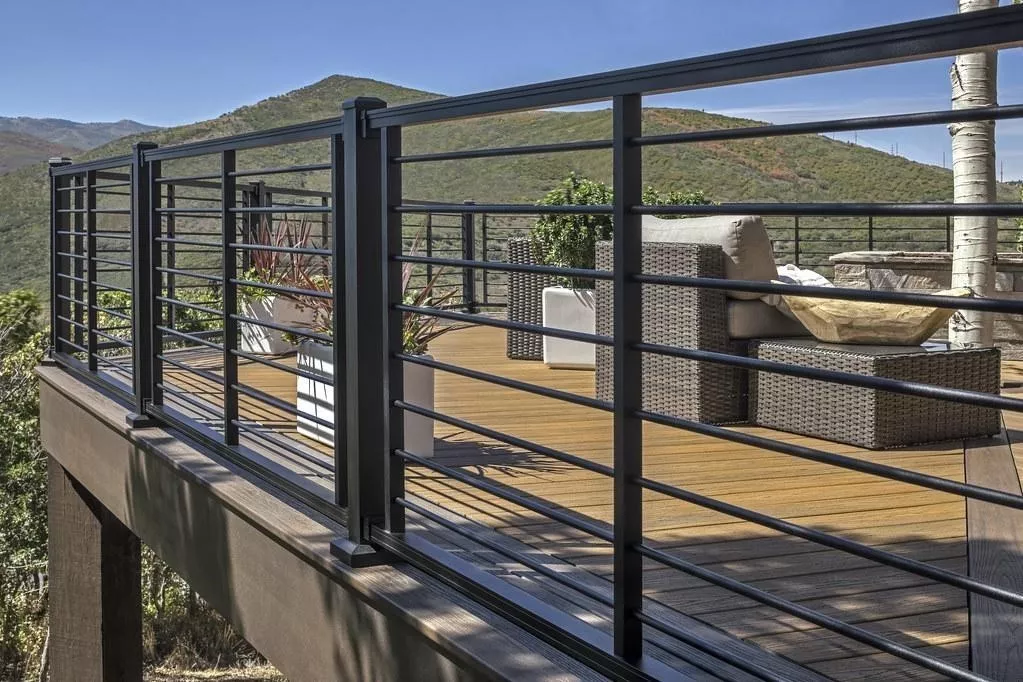
Aluminum railing creates a clean look that works especially well on modern homes or decks where you want to keep sightlines open. The slim posts and rails and narrow balusters give the railing a lighter, more refined appearance, which helps highlight the view rather than the rail itself. It pairs nicely with mixed-material designs and architectural styles that lean toward minimalist or contemporary aesthetics.
Cost
How much does composite deck railing cost?
Composite deck railing typically runs about $40–$80 per linear foot. Pricing varies based on the brand, style, and quality. Installation costs can also fluctuate depending on project complexity and whether the work is DIY or performed by a contractor. While composites are low-maintenance, warranties are sometimes shorter than those offered for aluminum products. Even so, both materials can provide lower lifetime costs than high-maintenance options like wood.
How much does aluminum railing cost?
Aluminum railing averages $50–$100 per linear foot. The same factors that can drive variances in installation costs for composite railing also affect aluminum. Although aluminum often carries a higher upfront price than many composite options, its durability and minimal maintenance requirements can make its lifetime cost competitive, and in some cases, lower than other railing materials.
Maintenance and Upkeep
Composite Railing
Different types of low-maintenance composite deck railing options will require slightly different levels of maintenance. Overall, the maintenance required for composite railing is quite low. Use gentle soaps to occasionally scrub your railing with a soft bristle brush and thoroughly rinse off any chemicals used.
When comparing composite to wood railings, you’ll find composites have the advantage in most ways. However, it’s worth noting that, just like aluminum railing, the manufacturer is the authority in the best ways to keep their composite products clean.
Aluminum Railing
Aluminum is typically given a protective coating to prevent rusting (typically, powder coating), which makes it fundamentally waterproof. It’s also highly tolerant to drastic changes in temperature. However, performing basic levels of upkeep is still necessary to keep aluminum railing looking its best.
Rails will need to be kept free of debris and occasionally cleaned of environmental contaminants using mild soaps. However, powder coated surfaces can interact with certain cleaning agents. It’s important to follow manufacturers’ guidelines when selecting cleaning products.
Aluminum railing can also be damaged by using abrasive materials, like steel wool pads. Keeping aluminum railings in pristine condition may require power washing twice annually, but regular care can greatly reduce the intervals between washing.
Lastly, it’s important to keep aluminum coated and protected from the elements. Most manufacturers offer touch-up kits that are nearly impossible to see when applied correctly should the powder coated finish get scratched.
Lifespan and Durability
Composite Railing
The average lifespan of composite railing is around 20-25 years, but the outcome heavily depends on the quality of the composite and how well it’s maintained. High-quality composites that are well-maintained can last for at least 25 years -- or potentially more, which is why it’s not uncommon to see composite railing carry a 25-year performance warranty.
While composite doesn’t have the hardness of metal, composite railing vs aluminum railing is a fairly even matchup when it comes to weatherproofing. Composite can be protected against mold, mildew, stains, and essentially every other vulnerability of wood.
Aluminum Railing
The average lifespan of aluminum railing is difficult to gauge. Most manufacturers offer at least a 20-year warranty, but it’s not uncommon to find lifetime warranties for aluminum railing because the material is exceptionally resilient. However, it’s important to read the fine print of a given product’s lifetime warranty because it may include certain caveats and conditions that may void the warranty.
Aluminum or composite deck railing are both exceptionally well suited to enduring the elements, but aluminum is a physically harder material. As a result, aluminum railing often offers better protection against scratches and dents.
Color Options
Composite Railing
You can find a fairly wide range of color options for composite railing. For instance, Trex Transcend® Railing provides nearly twice as many options as the aluminum alternative. This extended range of colors usually allows composites to provide a better compliment to their surroundings. You can discover more composite railing color options here. On the other hand, most composite product lines offer fewer infill options compared to aluminum. It really boils down to what suits your tastes, project needs, and budget. Both products are excellent premium alternatives to wood that will provide years of low-maintenance enjoyment.
Aluminum Railing
Aluminum railing is typically available in fewer color options than composite. Most aluminum railing is offered in black, white, and a shade of brown. For example, Trex Signature® Railing provides three main railing color options. You can discover more aluminum railing color options here. However, despite the lack of color options, most aluminum railing manufacturers offer several designs that can set your project apart.

Mix and Match
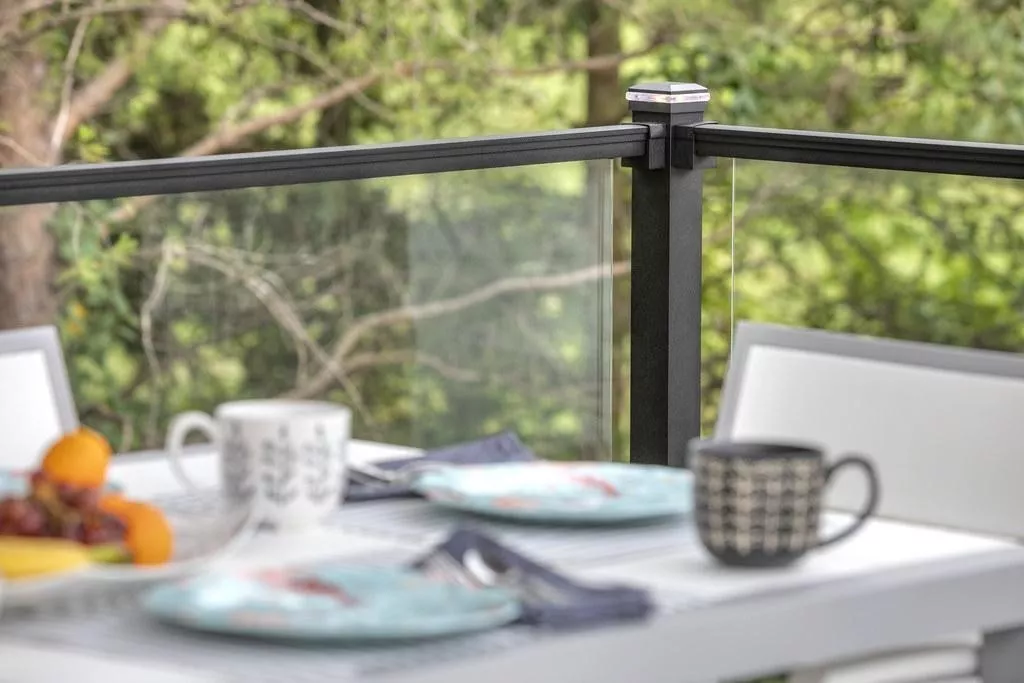
Many railing systems allow you to mix and match composite components with aluminum parts to get the exact look you want. Aluminum posts or balusters can be paired with composite top and bottom rails for a warmer, more traditional profile that still keeps sightlines open. Aluminum systems also make it easy to swap in other infill styles, including cable, mesh panels and glass, giving you more flexibility to match the railing to the architecture of your home and the view from your deck.

Accessorize
Accessorize your railing to match the way you use your outdoor space. A cocktail rail adds a wide, flat surface along the top—perfect for setting down drinks or giving the railing a more substantial profile. Integrated lighting can be added to posts, caps or under-rail locations to highlight stairs and create a warm, inviting atmosphere after dark. Gates are another useful option, providing a safe way to close off stairways or keep kids and pets contained without disrupting the overall look of the railing.
More Resources