



Adding a deck to your home is one of the most rewarding home improvement projects you can take on. A well-designed deck expands your living space, boosts your home’s value and provides a comfortable place to gather outdoors. But when it comes to planning, the big question is always the same: How much will it cost? Deck prices can vary dramatically depending on materials, labor and design. This guide will explain what drives deck costs and help you make smart choices that are a good fit for your lifestyle but won’t bust your budget.
Where Your Money Goes: Deck Material vs. Labor Costs
In most projects, the total price of a deck is split between materials and labor. Materials cover everything you can see and touch—decking boards, railings, framing, hardware, and finishes. Labor includes planning, expertise, and physical work of construction. While materials often make up a large portion of the budget, labor can equal or even surpass it depending on the complexity of the project and who you hire. The Material/Labor split often comes out close to 50/50. If you hire a high-end contractor and build your deck with the least expensive materials, the percentage could change to 35% for materials and 65% spent on labor. Using a budget-friendly contractor and the most expensive decking materials could reverse those numbers.
Decking Material Comparisons: What You Get for the Price
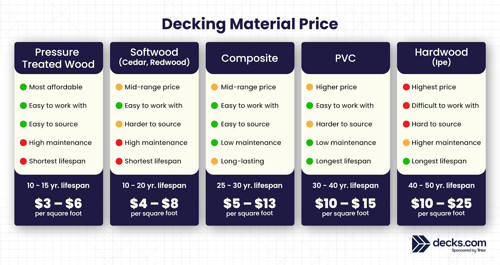
Choosing the right material isn’t just about the initial price; it’s also about how much maintenance you’re willing to take on, how long you want the deck to last, and the overall look you’re going for. Some options are more budget-friendly up front but require frequent upkeep, while others cost more initially yet deliver decades of durability with minimal effort.
- Pressure Treated Wood, the most common entry-level option, is durable against rot and insects but requires regular sealing or staining to maintain appearance and longevity.
- Softwoods like Cedar and Redwood are naturally resistant to decay and are more attractive than treated pine, but they also require ongoing maintenance to avoid fading and weathering.
- Composite deck boards are a mix of wood fibers and recycled plastics. Composite decking is low-maintenance, resists warping and comes in a wide range of colors and textures. It typically costs more upfront than wood but saves time and money on maintenance in the long run.
- PVC is a 100% synthetic material that offers top-tier resistance to moisture, insects, and fading. PVC decking is the most expensive non-wood option. It is lightweight, extremely low-maintenance and lasts longer than composite.
- Hardwood (Ipe and similar species)
Extremely dense and durable, with a rich, natural appearance. Hardwoods can last for decades but are heavy, more difficult to install, and will fade to gray if not regularly maintained.
Railing Material Comparisons: What You Get for the Price
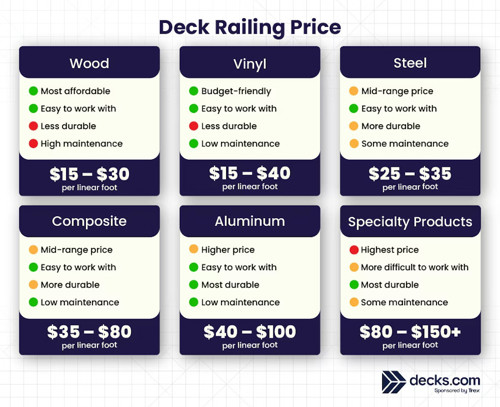
Different railing materials each bring their own advantages, drawbacks, and long-term considerations. Beyond appearance and durability, it’s worth looking at how warranties and installation methods affect the overall value. Many manufacturers back non-wood railings with up to 50-year warranties, which can provide peace of mind and protect your investment. In addition, several railing systems are sold in pre-engineered kits, making them easier to handle on site. That simplified installation can cut down on labor time and costs compared to the cost of building a railing from scratch out of wood.
- Vinyl railings are popular for being low-maintenance, weather-resistant, and cost-effective. They never need painting or staining, but many vinyl railings can feel bulky. They may also become brittle in extreme cold. PVC cellular railings—though often mistaken for vinyl—are far less common and significantly more expensive
- Wood is the most traditional and often the most affordable railing option. Wood railings are easy to customize and repair, but they require frequent painting, staining, or sealing to protect against rot, insects and weathering.
- Steel railings are strong. Steel is also sleek and can deliver a modern, industrial look with exceptional durability. They resist heavy impacts but can be prone to rust if not properly maintained or installed in exceptionally damp climates.
- Composite railings look like stained wood, but unlike wood, composite railings last longer and only require the occasional wash and rinse to keep them looking good. Like wood, they might not be the best fit for modern architectural designs.
- Aluminum is lightweight, corrosion-resistant and virtually maintenance-free. Aluminum railings are popular for their clean lines and long-lasting performance. They are often available in easy-to-install kits.
- Specialty Railings like Cable, Mesh, Rod Rail and Glass are the most expensive railing options but provide an upscale aesthetic. Mesh panels add safety without the bulk; cable railings deliver a contemporary feel and glass panels preserve views while serving as an effective wind barrier.
Factors that Affect Labor Costs
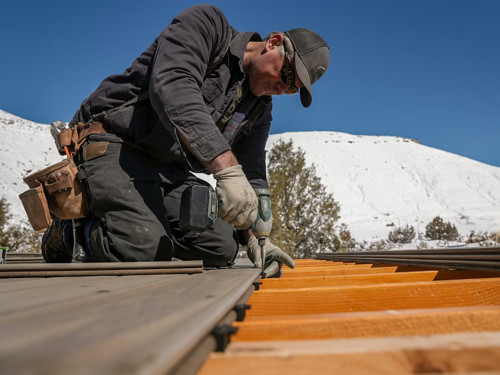
The price you’ll pay for professional deck builders goes beyond a simple hourly rate. Labor costs shift depending on how complex the project is, where you live and when you schedule the work. An experienced contractor may charge more up front, but their efficiency and craftsmanship can ultimately save you money by avoiding delays or mistakes. Timing, location and builder expertise will also affect the final labor bill.
- Difficulty of the design: Simple, rectangular decks are faster and cheaper to build than multilevel or curved designs.
- Urban vs. Rural contractors: Labor costs are usually higher in urban areas where demand and overhead costs are greater.
- Experience and Reputation: Seasoned contractors with strong reviews may charge a premium for their high-end services but often deliver better quality and fewer costly mistakes.
- Which season: Building in peak summer can mean higher rates and longer wait times, while scheduling in the off-season may save money.
So How Much Does a Deck Cost?
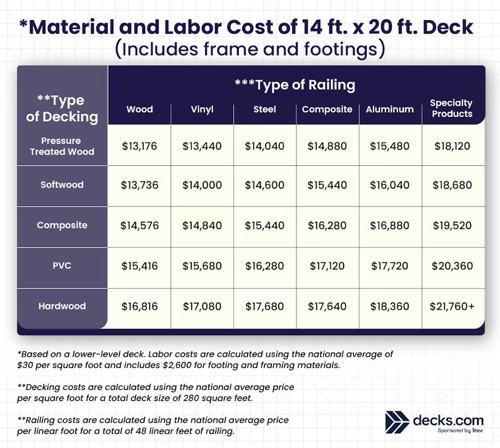
When you look at deck budgets, it helps to see how materials and labor actually add up on a typical project. The chart above breaks down the cost of building a 14 ft. by 20 ft. deck, including the frame and footings, using different combinations of decking and railing materials. By comparing side-by-side totals, you can quickly spot how swapping out wood for composite or aluminum railings for wood can shift the bottom line.
Keep in mind that these numbers represent averages based on national pricing. Your final cost will depend on local labor rates, regional material availability, and the complexity of your design. Still, the chart provides a realistic starting point: it shows not only how much you’ll spend on visible surfaces like decking boards and rails, but also how labor makes up a substantial share of the total.
How Does Deck Design Affect Price?
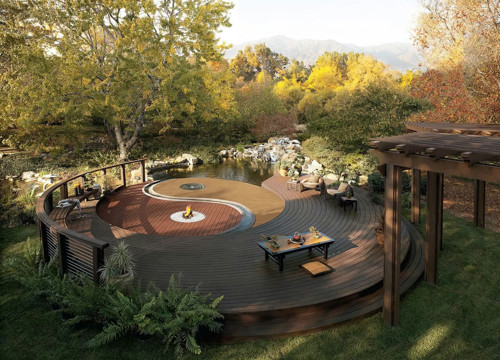
The structure and style of your deck directly impact cost. Taller and more intricate designs require additional materials, engineering, equipment and labor, while simpler layouts are faster and less expensive to build.
- Deck Height: Taller decks require more structural support, longer posts, and often additional safety features.
- Shape: Curves, wraparound sections, and multilevel designs are visually striking but more labor-intensive than a basic rectangle.
- Stairs: A few steps won’t break the budget, but long or complex staircases—especially with landings—add significant cost.
How Do Popular Add-ons Affect Price?
Upgrades can transform a basic deck into a fully featured outdoor living area, but every enhancement comes with added expense. Electrical work, specialty framing or utility hookups can quickly drive up both material and labor costs.
- Lighting: From post-cap lights to under-rail LEDs, lighting improves safety and ambiance but requires electrical work.
- Patterns and Inlays: Decorative options like picture framing, herringbone, or custom inlays add material waste and more installation time.
- Benches and Privacy Screens: Built-in seating and vertical screens provide comfort and seclusion but use extra framing and finish materials.
- Under Deck Drainage: Drainage systems that keep the space below dry can be a low cost way to increase the usability of space under the deck, but will add both labor and material costs.
- Hot Tubs and Outdoor Kitchens: A hot tub will require extra framing and larger footings, and outdoor kitchens might call for utility hookups that require the need to hire plumbers, mechanical contractors or electricians.
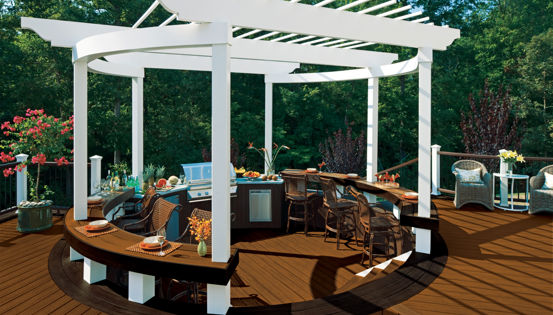
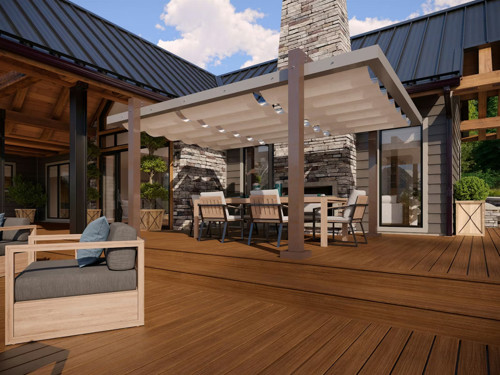
- Roofs: Adding a pergola, pavilion, or full roof structure essentially blends deck building with outdoor room construction—beautiful but costly.
- Porches: Adding rooms that function similar to outdoor spaces but can be used during three or four seasons will cost the same as the going rate for finished living spaces in your area.
Don’t Forget those Hidden Deck Building Costs
Even with a solid plan and material list, there are expenses that catch many homeowners off guard. Permits, site prep, rentals and disposal fees can add up and should be factored into the budget from the start.
- Permits and fees: Most municipalities require permits and inspections for decks.
- Site prep and leveling: Surface grading, tree removal, or drainage fixes could add considerably to labor costs and require specialize contractors.
- Equipment rental: Specialized tools like augers and scaffolding may be billed separately.
- Cleanup and disposal: Old deck removal, dumpster rental, or hauling fees are common necessities often overlooked by homeowners.
- Weather-related delays: Rain and snow can increase setup and cleanup time, which will add labor costs if you have hired your contractor on a time-and-material basis and are paying them hourly.
- Hidden surprises: Removing siding to install a ledger board can uncover hidden water damage or structural defects. And digging footings can reveal poor soil conditions that might need to be addressed.
Tips to Save on Deck Costs
A smart approach can stretch your budget without sacrificing quality. Careful design, flexible timing and a willingness to take on small tasks yourself can all help reduce the final price tag.
- Keep the design simple: Stick to a rectangular layout and basic railing to minimize labor.
- Do part of the labor yourself: Demolition, staining, or even cleanup can cut costs if you’re handy.
- Install features in phases: Add lighting, privacy screens, or inlays later when your budget allows.
- Hire contractors during off-season times: Early spring, late fall, or winter can be slower for builders, which may work in your favor.
- Use planning tools to avoid costly mistakes: Free online design tools can help you visualize the deck and minimize waste before construction begins.
More Deck Building Resources